L'arcvs
A digital platform designed to preserve culture heritage through fashion
ROLE
Product Designer
DURATION
Feb - May 2026
TOOLS
Figma
Figma Jam
Photoshop
L'arcvs
A digital platform designed to preserve culture heritage through fashion
ROLE
Product Designer
DURATION
Feb - May 2026
TOOLS
Figma
Figma Jam
Photoshop
About
About
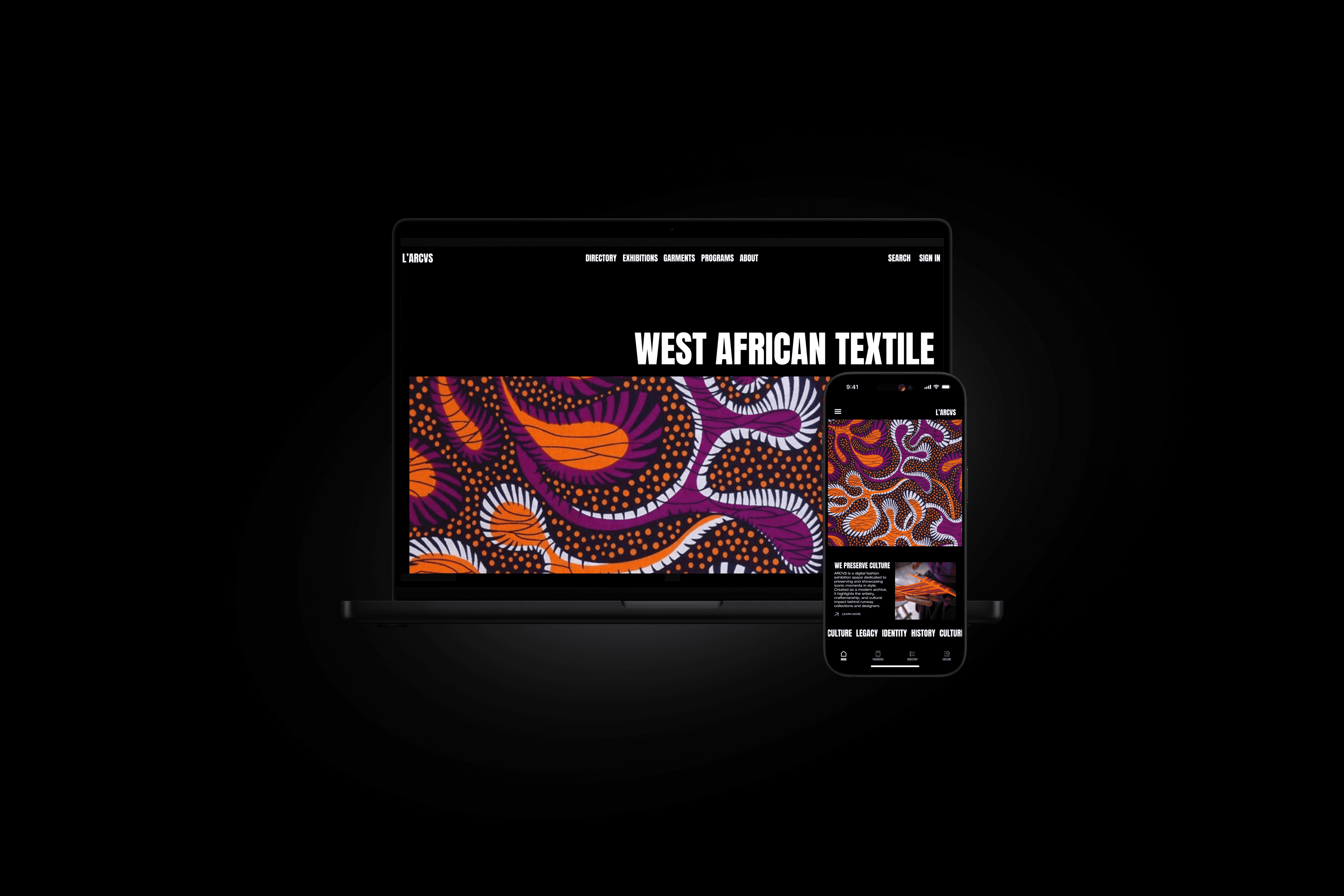
L'arcvs is a platform designed to preserve cultural heritage through fashion. It allows users to explore iconic garments beyond the surface, breaking down the provenance of the materials used as well as the story and craftsmanship behind each piece.
L'arcvs is a platform designed to preserve cultural heritage through fashion. It allows users to explore iconic garments beyond the surface, breaking down the provenance of the materials used as well as the story and craftsmanship behind each piece.
The Problem :
Although there are a few fashion archives available online, they can be difficult to navigate or lack cultural context. They often don’t provide enough insight into the actual essence of each piece, limiting how users understand and connect with fashion.
The Problem :
The Problem :
Although there are a few fashion archives available online, they can be difficult to navigate or lack cultural context. They often don’t provide enough insight into the actual essence of each piece, limiting how users understand and connect with fashion.
Although there are a few fashion archives available online, they can be difficult to navigate or lack cultural context. They often don’t provide enough insight into the actual essence of each piece, limiting how users understand and connect with fashion.
The Goal:
The goal of L’ARCVS is to create an engaging and accessible platform that allows users to easily navigate and explore fashion history beyond the surface by understanding the story and context behind both iconic and everyday garments . Whether someone is passionate about fashion or simply just curious about what they are wearing, L’ARCVS breaks it down and helps you better understand it through curated content, exhibitions and educational programs.
The Goal:
The Goal:
The goal of L’ARCVS is to create an engaging and accessible platform that allows users to easily navigate and explore fashion history beyond the surface through curated content, exhibitions and programs.
The goal of L’ARCVS is to create an engaging and accessible platform that allows users to easily navigate and explore fashion history beyond the surface through curated content, exhibitions and programs.
Competitor Analysis:
Competitor Analysis:
The first step in the research process was to better understand how fashion content is currently experienced online. To do this, i analyzed two fashion archives: FirstView and Archive PDF.
The first step in the research process was to better understand how fashion content is currently experienced online. To do this, i analyzed two fashion archives: FirstView and Archive PDF.

User Research:
User Research:
Once the competitor analysis was complete, i then conducted a user research with a small group of participants. to understand what they expected when using fashion platforms as a learning resource.
Once the competitor analysis was complete, i then conducted a user research with a small group of participants. to understand what they expected when using fashion platforms as a learning resource.
Key Findings:
Key Findings:
Key Findings:

User Personas:
User Personas:
Building on my research, i developed a persona to represent a key type of user and better guide the design decisions.
Building on my research, i developed a persona to represent a key type of user and better guide the design decisions.

Sitemap:
Sitemap:
To define the structure of L’ARCVS, i started by mapping out a sitemap to organize all the different types of content on the platform which helped me see how everything from garments, designers, exhibitions, and how learning content relate to one another.
To define the structure of L’ARCVS, i started by mapping out a sitemap to organize all the different types of content on the platform which helped me see how everything from garments, designers, exhibitions, and how learning content relate to one another.

User Flow:
User Flow:
Browsing Textiles to Program Enrollment
I then created a user flow going from browsing textiles to enrolling in a program. The flow highlights how users can discover materials, see how they are used in couture, learn more about the designers who use them, and eventually access educational programs, ensuring that each step encourages discovery
I then created a user flow going from browsing textiles to enrolling in a program. The flow highlights how users can discover materials, see how they are used in couture, learn more about the designers who use them, and eventually access educational programs, ensuring that each step encourages discovery

LO-FI Wireframes
LO-FI Wireframes
(Web and App)
(Web and App)
I then moved into low-fidelity wireframes for both web and mobile to explore the layout and structure of the platform. At this stage, the focus was on organizing content, defining navigation, and ensuring that the experience feels clear and easy to follow before introducing visual elements.
I then moved into low-fidelity wireframes for both web and mobile to explore the layout and structure of the platform. At this stage, the focus was on organizing content, defining navigation, and ensuring that the experience feels clear and easy to follow before introducing visual elements.
(Web view)
(Web view)

(App view)
(App view)

Ul Design Kit:
Ul Design Kit:
To ensure visual consistency across the platform, I developed a UI kit that defines the core elements of the design system. This includes typography, color, components, and interactive elements used throughout both the web and mobile experience.
To ensure visual consistency across the platform, I developed a UI kit that defines the core elements of the design system. This includes typography, color, components, and interactive elements used throughout both the web and mobile experience.

HI-FI Wireframes
HI-FI Wireframes
(Web and App)
(Web and App)
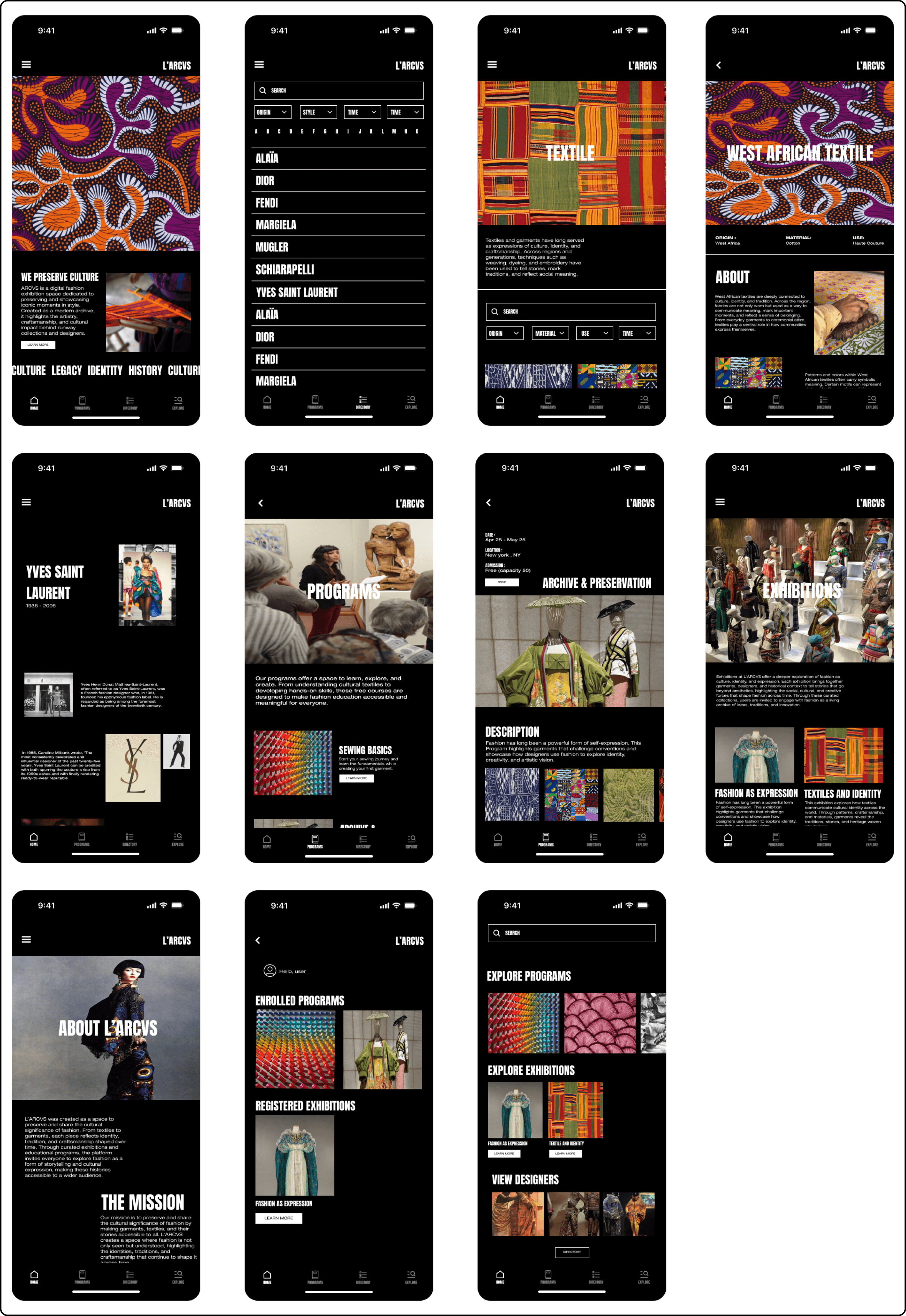
I then moved into high-fidelity designs for both web and mobile, applying the visual direction from the UI kit.
I then moved into high-fidelity designs for both web and mobile, applying the visual direction from the UI kit.
(App view)
(App view)
(Web view)
(Web view)

Usability Study:
Usability Study:
To now evaluate the design, a usability study was conducted with a small group of participants. The goal was to understand how users interact with the platform and identify areas where i could improved.
To now evaluate the design, a usability study was conducted with a small group of participants. The goal was to understand how users interact with the platform and identify areas where i could improved.

Iteration 1:
Iteration 1:
Based on the feedback given , the first action i took was to differentiate and simplify the CTAs while making them more consistent across the platform. Exhibition dates were also introduced into the layout to provide clearer context and better structure. These changes reduce visual clutter and help guide users more clearly through the experience.
Based on the feedback given , the first action i took was to differentiate and simplify the CTAs while making them more consistent across the platform. Exhibition dates were also introduced into the layout to provide clearer context and better structure. These changes reduce visual clutter and help guide users more clearly through the experience.


Iteration 2:
Iteration 2:
The cards were updated across the platform. Instead of relying on separate buttons, cards were made fully clickable, allowing users to navigate directly through the visual content.
The cards were updated across the platform. Instead of relying on separate buttons, cards were made fully clickable, allowing users to navigate directly through the visual content.


Prototype
Prototype
After refining the experience through iteration and feedback, i was able to bring the final web and mobile prototypes together The final design reflects improved navigation clarity, more intuitive interaction patterns, and a smoother overall user flow.
After refining the experience through iteration and feedback, i was able to bring the final web and mobile prototypes together The final design reflects improved navigation clarity, more intuitive interaction patterns, and a smoother overall user flow.
TAKEAWAYS
TAKEAWAYS
The main focus of this project was to create an experience that encourages discovery, allowing users to explore fashion content in a more natural and engaging way. While a filter system was also introduced for users who wanted to narrow down their search more directly, the goal was to let users move fluidly between pages while still maintaining a clear sense of direction. Through this process, i learned how important it is to balance exploration with clarity. Small interaction such as simplifying call-to-actions or adding details such as dates for more clarity, and refining typography to keep things consistent played a key role in making the experience feel more intuitive , and served as a reminder of how much these small details matter when designing real products for users. Overall, this project helped with being intentional in how I design user flows to support both open exploration and clear navigation.
The main focus of this project was to create an experience that encourages discovery, allowing users to explore fashion content in a more natural and engaging way. While a filter system was also introduced for users who wanted to narrow down their search more directly, the goal was to let users move fluidly between pages while still maintaining a clear sense of direction. Through this process, we learned how important it is to balance exploration with clarity. Small interaction such as simplifying call-to-actions or adding details such as dates for more clarity, and refining typography to keep things consistent played a key role in making the experience feel more intuitive , and served as a reminder of how much these small details matter when designing real products for users. Overall, this project helped with being intentional in how I design user flows to support both open exploration and clear navigation.


Get in touch
© 2026 Anne Tchoumba
Get in touch
© 2026 Anne Tchoumba
Get in touch
© 2026 Anne Tchoumba